


TriviaPeak: Trivia Quiz Games
4.730.00 Reviews
App Specs
- Version
- 1.0.5
- Updated On
- License
- Free
- Downloads
- 10,000+
- Developer
- Lucky Echo Labs
- Categories
- Trivia
- Platform
- Android
Screenshots

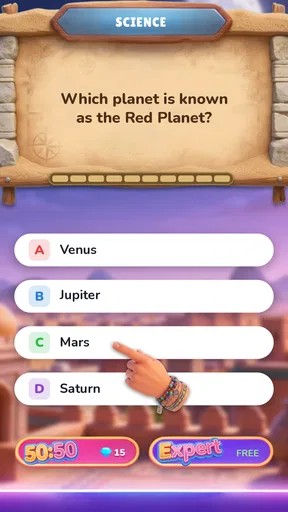

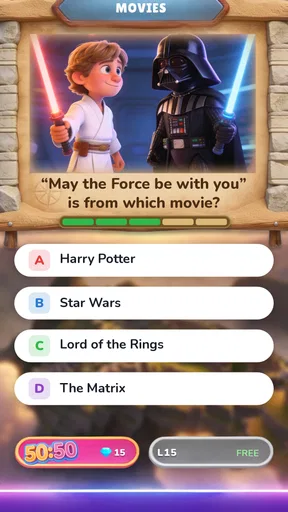


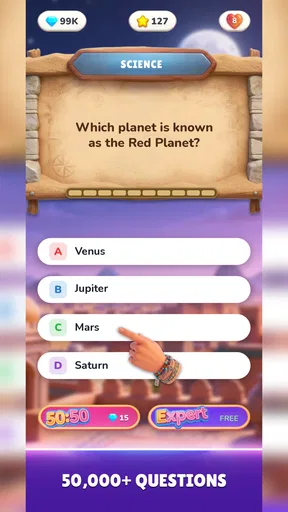

 Analysis by AppCompare
I went into TriviaPeak: Trivia Quiz Games expecting a familiar question-and-answer routine, but its appeal became clearer once I treated each round as a small climb rather than a long study session. The game turns general knowledge into a sequence of decisions: read a question, choose an answer, see the result, and decide whether I want to push farther. That simple rhythm makes it easy to pick up when I have a few spare minutes.
It is a free trivia game from Lucky Echo Labs, aimed at Everyone and built for Android devices running version 7.0 or later. The current release is version 1.0.5. Its central promise is especially useful for people who do not always have a reliable connection: I can play offline, moving through subjects that range from movies to science. That makes it a better fit for commutes, waiting rooms, flights, or quiet breaks than trivia games that depend on being connected.
How the question loop feels in actual play
I find the question loop easiest to enjoy when I treat each answer as a small decision, not a race: reading the full prompt before choosing helps me avoid confident guesses that come from spotting a familiar word too quickly. That habit also makes a short offline session feel intentional, whether I’m passing time in a queue or settling in for a few questions. Next, I’d look at the practical checks that can make a first session smoother.
The first question gets me moving quickly
The strongest part of the design is that there is very little ceremony between deciding to play and facing a question. I do not need to prepare a profile, gather a group, or wait for another player. The first action is simply reading the prompt and committing to an answer. That direct start matters because trivia is often a “maybe later” type of game; if the opening screen makes me work, I close it. Here, the basic idea is immediately understandable.
The offline focus also changes how I use it. I can open a session in places where online multiplayer trivia would be inconvenient or impossible. I would use it during a short bus ride, for example, not because I expect an epic gaming session but because one question can become several without demanding my full attention for an hour. When I need to stop, the natural break arrives after an answer rather than in the middle of a live match.
The subject range gives the opening choice some variety. Movie questions invite quick recognition and memory, while science questions can require more careful reasoning. That contrast is useful because it prevents the game from feeling like one narrow school subject. I also appreciate that the concept does not assume I am an expert. A player can enjoy knowing an answer, learning from a mistake, or simply testing which areas are stronger.
There is an important trade-off here. The game is better for solo, self-paced play than for a social trivia night. If I want banter, direct competition, or the excitement of seeing another person answer at the same time, a multiplayer quiz would be more suitable. TriviaPeak’s strength is the opposite: it removes those pressures and lets me control the pace.
Worth Reading Before You Choose

Flipboard Shows What News Apps Must Do Beyond the Feed

Switching to Android Auto Means Rethinking Your Driving Routine

Google Calendar Makes a Crowded Week Easier to Manage

Ludo King Makes the Most of the Minutes Between Plans

Baby Panda World Brings Quick Play to Modern Phones, but Its Game Library Feels Busy

ESPN’s Live Game View Makes Following Close Games Easier
Feedback keeps the next question meaningful
Every answer has a small emotional consequence. A correct choice gives me the satisfaction of moving upward, while a wrong one interrupts the run and reminds me that confidence is not the same as knowledge. That feedback rhythm is what makes the climb idea work. The question itself is only the first half of the experience; the result tells me whether I should feel confident, curious, or ready to try again.
I found the feedback most useful when I resisted rushing. In a movie category, I might recognize a title and answer instantly. In science, I am more likely to compare the choices and eliminate the least plausible ones. The game rewards attention in a modest but effective way: even when I know the topic, careless reading can undo a good run. My practical tip is to pause for a second before selecting, particularly when two answers look almost right.
That pause also makes the game more than a random guessing exercise. I can use wrong answers as signals about the kind of knowledge I need to revisit. If I repeatedly miss questions in one area, I know that category is a weakness rather than blaming a single unlucky question. I would not treat the game as a formal learning course, but it can turn gaps in general knowledge into small prompts for further reading.
The feedback loop is less compelling for players who need detailed explanations after every mistake. A trivia game can tell me that my choice was wrong without replacing a textbook or a full lesson. If your main goal is structured education, a dedicated learning app will usually offer more context. TriviaPeak works best when the answer result is enough to motivate another attempt, not when I expect a complete explanation of every subject.
Why the climb makes another session tempting
The reward is not only the individual correct answer. It is the feeling of preserving momentum and seeing how far I can go before the run ends. That creates a gentle form of tension: I want to continue because the next question might extend the climb, but I also know that a careless choice can reset my progress. The game does not need complicated controls to create that decision.
This is where the title’s peak metaphor becomes practical rather than decorative. I start with a manageable question, gain confidence from a correct response, and then face the temptation to answer too quickly. The reward is partly progress and partly self-comparison. I may begin a session just to pass time, then continue because I want to beat the level of concentration I reached a few minutes earlier.
For families, the Everyone rating makes the game approachable as a shared casual activity, although I would still play alongside younger children rather than assume every question will match their reading level or interests. Adults can use it as a low-pressure break, and friends can take turns answering from the same device if they want an informal challenge. It does not need to be framed as a serious contest to be enjoyable.
The free entry point is another reason to try it. There is no purchase required to begin, while optional in-app items range from $1.99 to $6.99 each. I would treat those purchases cautiously and decide whether they add enough value to my own routine before spending anything. The game is easiest to recommend to someone who wants a no-cost way to sample offline trivia first, rather than someone looking for a large premium campaign.
The reset is part of the appeal, not just a penalty
A failed run can be frustrating, but the reset is also what gives the next session a reason to exist. If every answer simply added points without risk, I would have less incentive to concentrate. Starting again lets me test whether the previous mistake was a pattern, a lapse in attention, or a question that caught me off guard. That makes a short restart feel purposeful instead of repetitive.
I especially like the reset for brief play windows. If I have only a few minutes, I do not need to remember a complicated campaign state or finish a long chapter. I can attempt a climb, accept the result, and close the game. Later, I can return with a clean slate. This structure suits people who play in fragments, though it may disappoint anyone who prefers permanent progression, character upgrades, or a story that develops between sessions.
My most useful habit is to change the goal after a reset. On the first attempt, I might simply answer naturally. On the next, I focus on accuracy and read each option carefully. Another time, I may use the session to test a weaker subject. This prevents repeated runs from becoming mindless tapping. The game supplies the questions, but the player has to supply the reason for trying again.
There is also a psychological limit. Repeated resets can feel flat if the question mix does not surprise me or if I am looking for a strong sense of long-term achievement. TriviaPeak is built around the immediate loop, so it is not the right choice for someone who wants an extensive collection system or a narrative reward after every milestone. Its compact design is convenient, but compactness can also make the experience feel light.
Offline play changes where it fits in daily life
The offline capability is more than a line in the description; it determines the situations in which I would recommend the game. I can imagine opening it before a flight, during a train journey with poor reception, or while waiting for an appointment. It is also useful when I want to put my phone into a lower-distraction mode and avoid the social pressure of live competition.
That convenience comes with a different kind of limitation. Offline play means the experience is designed around what is already available on the device, so it is not the same as joining a constantly changing online question pool or competing against a live community. If current events, real-time rankings, or multiplayer interaction are essential to you, another trivia option will probably feel more alive.
I would also recommend downloading and starting a session before relying on it for travel. That is simply good practice with any offline game: make sure it opens properly and that the content you expect is available before you are disconnected. Once it is ready, the format is well suited to unpredictable breaks because a single question can be enough for a complete mini-session.
How it compares with familiar trivia alternatives
Compared with online multiplayer quiz games, TriviaPeak feels calmer and more private. There is no need to match schedules or worry about a fast opponent answering first. That makes it better for reflection and casual repetition, but less exciting for people who enjoy the pressure of a live scoreboard. I would choose this game for a solo commute and a social quiz app for a group gathering.
Compared with educational flashcard tools, it is more playful and less systematic. The climb, answer feedback, and reset encourage me to keep going, while flashcards are usually better when I need deliberate repetition of a fixed subject. Someone preparing for an exam should not substitute this for a focused study system. Someone wanting a varied knowledge break may find the broader trivia mix much more inviting.
Compared with paid trivia games, the free starting point lowers the risk of trying it. The trade-off is that optional purchases are present, and the experience is centered on a repeatable question loop rather than a large premium package. I would recommend testing the free experience first and only considering an item if it clearly improves the way you play. The price range makes that decision personal rather than automatic.
The rating gives the game a strong first impression, with a 4.7 average from around 320 ratings and about 30 written reviews. It has also passed 10K+ installs, so it is not an entirely unknown experiment. I see those figures as encouraging signs, not proof that every player will enjoy it. A person who dislikes repeated quiz attempts will still find the same basic structure limiting, regardless of how positively others rate it.
Who will get the most from it
I would recommend it to players who want a lightweight offline trivia game with an immediate start and a clear reason to attempt one more round. It is particularly suitable for people who enjoy general knowledge across different subjects but do not want a complicated progression system. Families can use it for informal turn-taking, and solo players can make it part of a short daily break.
It is also a good choice for anyone who likes measurable personal improvement without needing a formal leaderboard. I can notice whether I am reading more carefully, recognizing more movie references, or making fewer impulsive guesses. Those improvements are small, but they make the repeat loop feel less empty. The game becomes more satisfying when I set a simple target, such as reaching a particular point in the climb without rushing.
I would skip it if your priority is live competition, deep explanations, a story campaign, or a specialized subject. It is not designed to replace a serious learning platform, and its offline strength naturally separates it from online communities. Players who need constant novelty may also prefer a service with frequent live content. Choosing it makes sense when simplicity and availability matter more than breadth of systems.
Small habits that improve the experience
- Read the entire question before looking for a familiar keyword. This is especially helpful when a question includes a qualification that changes the most obvious answer.
- Use resets diagnostically. After a mistake, identify whether the problem was knowledge, speed, or misreading, then adjust your next attempt instead of tapping through automatically.
- Match the session to your attention. When tired, aim for careful answers rather than a personal record; trivia becomes less enjoyable when the climb turns into hurried guessing.
- Use category variety to avoid a stale routine. Move between entertainment and science-oriented questions when possible so that one weak area does not define the whole experience.
- Keep optional purchases separate from the core test. First decide whether the free loop fits your habits, then judge any item by whether it solves a real annoyance rather than by impulse.
These habits do not add hidden mechanics to the game; they simply make the existing action-feedback-reward-reset cycle more deliberate. That distinction matters. The game is not pretending to be a full course or a competitive platform. Its value comes from making a small amount of free time feel organized and slightly challenging.
My verdict on the complete loop
After using it as a short-break game, I think TriviaPeak succeeds because each part of the loop supports the next. The first question is easy to approach, the answer result gives immediate feedback, a correct response creates enough reward to continue, and a failed run provides a clean reason to restart. That is a modest design, but it is coherent and practical.
The experience is strongest when I want trivia without preparation, connection requirements, or social pressure. It is weaker when I expect detailed teaching, lasting progression, or a constantly changing online challenge. Those are not minor differences; they define whether the game will feel focused or underpowered for you.
Lucky Echo Labs has made a straightforward trivia title that understands the usefulness of short sessions. The free entry point, Everyone rating, offline format, and mix of subjects make it approachable, while the optional purchases mean I would still play thoughtfully before spending. For a person who enjoys answering one more question before putting the phone away, I can recommend giving it a try. The reset is what keeps the climb alive: each new session feels like a fresh chance to answer more carefully and go a little farther.
Pros
- Wide range of trivia categories keeps quizzes varied.
- Quick rounds make it easy to play during short breaks.
- Simple interface is easy for new players to understand.
- Competitive scoring adds motivation to improve.
- Regular questions can help reinforce general knowledge.
Cons
- Some questions may feel too easy for experienced trivia fans.
- Internet access may be needed for certain features.
- Ads can interrupt gameplay between quiz rounds.
- Answer quality may vary across different categories.
- Progression can feel repetitive after extended play.
FAQs for TriviaPeak: Trivia Quiz Games
What is TriviaPeak: Trivia Quiz Games?
TriviaPeak: Trivia Quiz Games is a mobile quiz app built around short, topic-based challenges. Players answer multiple-choice questions, test their general knowledge, and try to improve their scores across different categories. It is suitable for casual solo play and quick sessions, making it a convenient option when you want an entertaining brain workout without committing to a long game.
Is TriviaPeak: Trivia Quiz Games free to download and play?
The app can generally be downloaded at no initial cost, allowing users to try its main quiz experience before deciding whether they want additional content. However, availability of advertisements, optional purchases, premium question packs, or other paid features may depend on the version and platform. It is worth checking the store listing and in-app purchase details before downloading.
What types of questions and categories are available?
TriviaPeak focuses on general-knowledge quiz content, with questions that may cover subjects such as history, science, geography, entertainment, sports, culture, and everyday facts. The exact selection can vary as the app is updated. Difficulty may also differ between rounds, so beginners can enjoy accessible questions while experienced trivia players still have opportunities to be challenged.
Can I play TriviaPeak offline or without creating an account?
Some quiz features may work without a full account or constant internet connection, but this can depend on the app version, device, and the specific mode being used. Online access may be required for advertisements, score synchronization, updates, leaderboards, or newly downloaded questions. Before relying on it during travel, open the app once and confirm which features remain available offline.
Is TriviaPeak suitable for children and family play?
TriviaPeak can be enjoyable for families because its multiple-choice format is easy to understand and encourages players to learn while competing. Nevertheless, parents should review the app’s age rating, question content, advertisements, privacy information, and any social or purchase features before allowing younger children to use it. Difficulty and subject matter may not be equally appropriate for every age group.


